Thursday, November 6, 2008

2.0GB Compact Flash Card HI-Speed 40

2.0GB Compact Flash Card HI-Speed 40

CompactFlash is the world's most popular removable mass storage deviceand digital camera memory. The CompactFlash card is about the size of a matchbook and only weighs half an ounce. CompactFlash technology has resulted in the introduction of a new class of advanced, small, lightweight, low-power mobile products that significantly increases the productivity and enhances the lifestyle of... More millions of people. These products include digital cameras, digital music players, desktop computers, handheld PCs (HPCs), personal communicators, Palm PCs, Auto PCs, digital cameras.

With the advent of high megapixel digital cameras most brands have introduced a high speed compact flash (CF) card to their range, the high transfer rate (read & write) ensures that the camera saves pictures faster and is quickly ready for the next shot. Hi speed CF cards include: Kingston Elite, SanDisk Ultra & Extreme


Compact flash memory card was the first small form factor flash card and was introduced by SanDisk in 1994. Compact flash (CF) cards incorporate their own controller and are also manufactured by Lexar and Samsung. Our range of compact flash includes popular brands such as Kingston, Fuji and SanDisk.


Buy more memory from : www.oempcworld.com

Thursday, October 30, 2008

SLC vs. MLC Flash Memory


SLC vs. MLC: An Analysis of Flash Memory


Single-level cell (SLC) and multi-level cell (MLC) Flash memory are similar in their design. MLC Flash devices cost less and allow for higher storage density. SLC Flash devices provide faster write performance and greater reliability, even at temperatures above the operating range of MLC Flash devices.

SLC Flash stores one bit value per cell, which basically is a voltage level. The bit value is interpreted as a “0” or a “1” and there are multiple values that an MLC cell can represent. The values can be interpreted as four distinct states: 00, 01, 10, or 11.


SLC and MLC Compared

Now that the differences between SLC and MLC have been explained, let’s compare their specifications to help further make a distinction between the two grades.


SLC MLC
Density 16Mbit 32Mbit 64Mbit
Read Speed 100ns 120ns 150ns
Block Size 64Kbyte 128Kbyte
Architecture x8 x8 / x16
Endurance 100,000 cycles 10,000 cycles
Operating Temperature Industrial Commercial


Advantages and disadvantages of SLC Flash and MLC Flash


SLC MLC
High Density
Low Cost per Bit
Endurance
Operating Temperature Range
Low Power Consumption
Write/Erase Speeds
Write/Erase Endurance

Please visit for more information : www.oempcworld.com

Wednesday, October 29, 2008

Express Card

Express Card:

ExpressCard is a hardware standard replacing PC cards (also known as PCMCIA cards), both developed by the Personal Computer Memory Card International Association (PCMCIA). The host device supports both PCI Express and USB 2.0 connectivity through the ExpressCard slot, and each card uses whichever the designer feels most appropriate to the task. The cards are hot-pluggable. This is an open standard by ITU-T definition which can be obtained from the ExpressCard website. However, a US$2,500 fee[1] is required to access the documentation for non-PCMCIA members.


Uses
These slots can accept Firewire 800 (1394B), Serial ATA external disk drives, Solid-state drives, Wireless network interface cards, TV tuner cards, soundcards, additional memory and memory card readers, among other things.


Form factors:
ExpressCard supports two form factors, ExpressCard/34 (34 mm wide) and ExpressCard/54 (54 mm wide, in an L-shape) — the connector is the same on both (width 34 mm). Standard cards are 75 mm long (10.6 mm shorter than CardBus) and 5 mm thick, but may be thicker on sections that extend outside the standard form — for antennas, sockets, etc. The 34 mm form factor cards fit into both 34 mm and 54 mm card slots via a diagonal guide in the rear of the 54 mm slot that guides the card to the connector. The 54 mm card will fit in only a 54 mm slot.

For more information please visit : www.oempcworld.com

Friday, October 17, 2008

SODIMM memory


A SO-DIMM, or small outline dual in-line memory module, is a type of computer memory integrated circuit.SO-DIMMs are mainly used in notebooks, small footprint PCs (such as those with a Mini-ITX motherboard), high-end upgradable office printers, and networking hardware like routers.

SO-DIMMs have 72, 100, 144, or 200 pins. The 100 pin package supports 32-bit data transfer, while the 144 and 200 package supports 64-bit data transfer. This compares to regular DIMMs that have 168, 184, or 240 pins, all supporting 64-bit data transfer.

100-pin SO-DIMMs have two notches, 144-pin SO-DIMMs have a single notch near (but not at) the center, and 200-pin SO-DIMMs have a single notch nearer to one side.


SO-DIMMs are more or less equal in power and voltage rating to DIMMs, and as memory technology moves forward, both SO-DIMMs and DIMMs are available in equal speed (clock speeds such as 400Mhz PC3200, for example, and CAS latency such as 2.0, 2.5, and 3.0) and capacity (512MB, 1GB, etc.). More recent DDR2 SO-DIMM memory modules have clock speeds up to 800 MHz PC6400 and modules will soon be available with speeds of 1066 MHz PC8500.

SO-DIMMS are useful to design systems which have space restrictions and fit into small Form Factor systems/PCs.

Buy SODIMM Memory from : www.oempcworld.com

Thursday, October 16, 2008

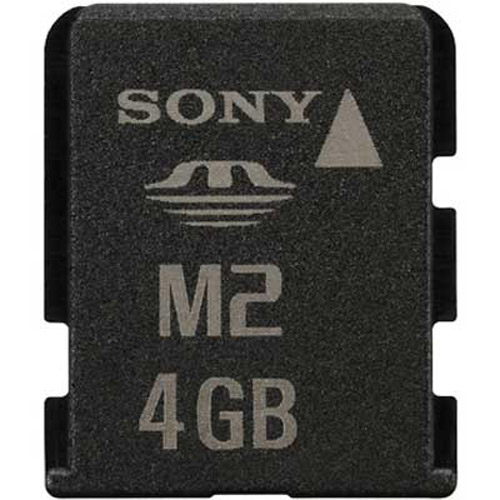
MS Micro M2 memory sticks


MS Micro M2 memory sticks memory

Sony memory stick micro M2 is a new ultra small memory card designed to meet the growing storage needs of highly compact, multifunctional Sony Ericsson’s new generation of slim line, multimedia mobile phones needing expandable storage for music, videos, and quality photos. The advantage of the M2 is compatibility with all M2 slotted mobile phones as well as all Memory Stick PRO Duo slotted devices when accompanied with the included M2 adapter.The Sony memory stick micro M2 is approximately one quarter the size of memory stick PRO Duo media, but only 1.2 mm thick and because it is a dual voltage card it can be used with both mobile phones (1.8 volts) and memory stick PRO compatible products operating at 3.3 volts. Compatibility with memory stick PRO devices is via use of the supplied micro M2 adapter.

The memory stick micro M2 offers improved durability and reliability and works perfectly in temperatures from -25C to 85C. The M2 card enables high resolution moving image recording due to minimum write speed guarantee of 15 Mbps.

Features:
  • Includes Memory Stick PRO Duo adapter for universal compatibility with M2 slots and Memory Stick PRO Duo slots
  • Dual voltage operation; 1.8v for new Sony Ericsson mobile phones, 3.3v for Memory Stick PRO Duo compatible devices
  • Controlled ejection design allows for easier removal
  • Sony Magicgate encryption technology support


MS Micro M2 memory sticks memory compatible with:
Sony: PlayStation 3
Sony Ericsson: K530i, K550i, K610i, K630i, K660i, K770i, K790i, K800i, K810i, K850i, M600i, P1i, SE S500i, T650i, V630, V640i, W200i, W300i, W380i, W580i, W610i, W660i, W710i, W880i, W890i, W910i, Z530i, Z550i, Z558i, Z610i, Z710i


Visit for more information : www.oempcworld.com

Wednesday, October 15, 2008

SIMM Memory

O E M P C W O R L D- The world's memory value leader


SIMM (Single In-Line Memory Module)

A SIMM (single in-line memory module) is a module containing one or several random access memory (RAM) chips on a small circuit board with PINs that connect to the computer motherboard. This is an older type of computer memory.Since the more RAM your computer has, the less frequently it will need to access your secondary storage (for example, hard disk or CD-ROM), PC owners sometimes expand RAM by installing additional SIMMs. SIMMs typically come with a 32 data bit (36 bits counting parity bits) path to the computer that requires a 72-pin connector. SIMMs usually come in memory chip multiples of four megabytes.Sometimes you can get away with installing SIMMS, but they have to be installed in pairs.

The memory chips on a SIMM are typically dynamic RAM (DRAM) chips. An improved form of RAM called Synchronous DRAM (SDRAM) can also be used. Since SDRAM provides a 64 data bit path, it requires at least two SIMMs or a dual in-line memory module (DIMM).


72 pin SIMM memory Categories:


For more information : www.oempcworld.com


Tuesday, October 14, 2008

miniSD memory cards


The miniSD Card is a small form factor removable and portable memory device intended for use in cell phones/mobile phones, digital cameras, MP3 players and many other gadgets.
In a March 13, 2003 press release, SanDisk Corporation announced the introduction of the miniSD and demonstrated it at CeBIT 2003.

The miniSD card was adopted in 2003 by the SD Association as an ultra-small form factor extension to the SD card standard. While the new cards were designed especially for use in mobile phones, they are usually packaged with a miniSD adapter which enables compatibility with all devices equipped with a standard SD Memory Card slot.

The miniSD card is made by several different manufacturers and comes in different brand names. Its compatibility is universal.The miniSD card is often confused with the microSD card which is another, smaller, SD derivation. The microSD card may be used in miniSD devices through use of an adapter, but miniSD cards cannot be used in microSD devices since they are larger than a microSD slot.The miniSD card is currently produced in capacities ranging from 16 MB to 8GB (miniSD) and 4GB to 6GB.

Features :

  • The MiniSD Card, a thumb sized flash memory card, offers the best features of SD but in smaller physical form factor.
  • New capabilities in 2.5G and 3G mobile phones including built-in digital still cameras, content downloading, and games are dramatically increasing the requirements for data storage and creating the need for removable storage.
  • The miniSD Card meets this need by providing the functionality of a standard SD Card in the ultra small form factor required by mobile phones.
  • The MiniSD SECURE DIGITAL memory card is available in capacities from 128MB to 4GB and is compatible with portable computing devices, digital cameras, cellular phones, voice recorders and MP3 players.
  • This MiniSD Secure Digital SD Card is the perfect storage device for Digital Cameras, Cell Phone,MP3 Players, PDA's, etc. It is of perfect quality.
  • MiniSD Secure Digital (SD) is the fastest growing category of flash memory cards due to its widespread use in digital cameras, digital camcorders, PDAs, handheld PCs and mobile phones, the SD cards will surpass Compact Flash and become the most popular flash memory card .
  • These MiniSD cards are manufactured to SD Card specifications and are compatible with digital devices that use Secure Digital.
www.oempcworld.com